Teaching
For the past fifteen years, I have taught writing at Yale. Lately, I’ve struggled with how to teach storytelling in the age of AI. So I told my students to stop writing.
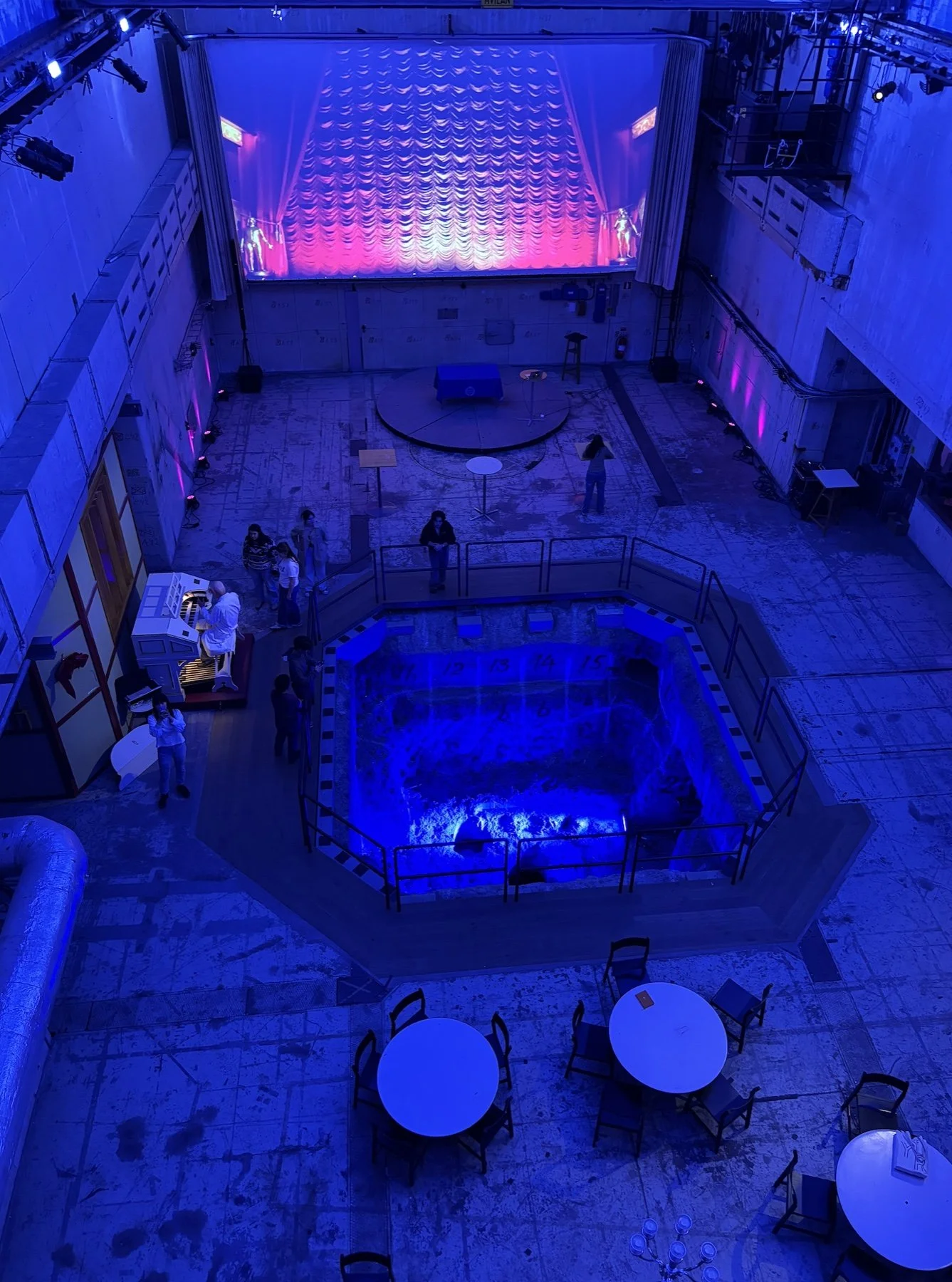
This past summer, I found myself deep beneath the streets of Stockholm, Sweden, in a defunct nuclear reactor hall. The vast, cavernous space was illuminated in a glow of otherworldly light. Old ladders, catwalks, and spiral staircases climbed upward into darkened gloom overhead. It was as quiet as a crypt, except for the sounds of my students tapping away on their laptops. They were writing young adult novels – and what better place to do it?
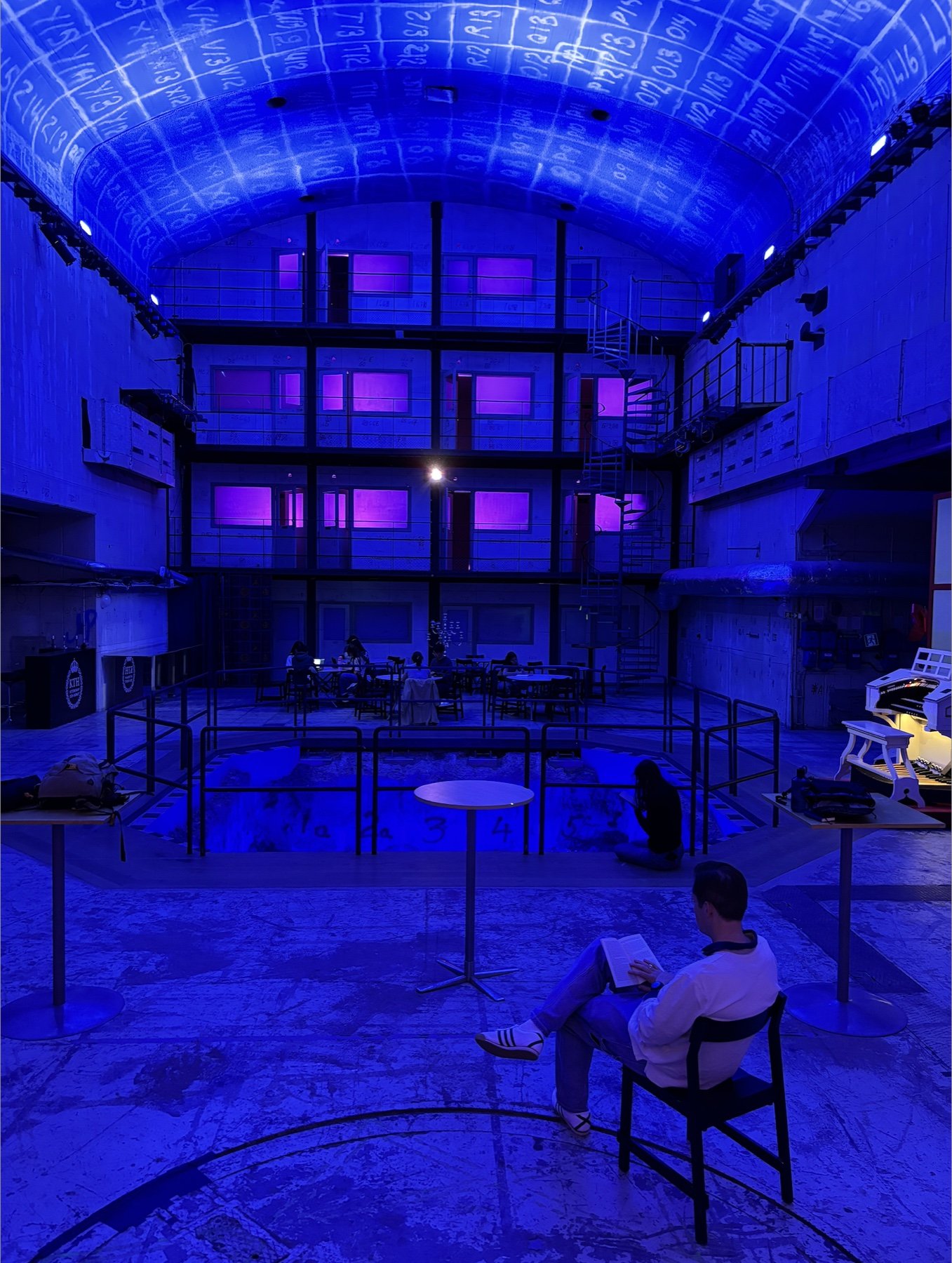
My students explored the R1 Nuclear Reactor in Stockholm and spent the afternoon writing in this ghostly space.
The story of how we ended up here, in this reactor hall, is a long one. It all began fifteen years ago, when I first started teaching writing at Yale. I am a journalist by training and, initially, I taught a journalism class. At some point, the department chair asked me if I would teach a class on young adult writing. I hesitated. Yes, sure, I had written a few Y.A. novels, but I hardly felt qualified to teach the subject. Reluctantly, I agreed to give it a try. I knew that, if I had any chance of succeeding, I had to mix things up and change my approach to teaching. This is all about writing stories for kids, I kept telling myself. You have to start thinking like a kid.
On the first day of class, I asked my college students to get down onto the floor and crawl under the classroom table. “What do you see?” I asked them. They exchanged nervous glances, like maybe I’d lost it. Then, slowly, they offered their observations about graffiti, scuff marks, and hardened gum. Finally one of them said: “This makes me feel like I’m nine again.”
I told my students that this exercise was, in essence, the point of the class. The goal was to conjure a “point of view,” namely, how a kid sees the world. I wanted to remind them how the space beneath a table can feel like – and even become – a cave, or the cabin of a ship, or the belly of a dragon.
And then I made my pitch.
I told them that, in this creative writing class, I didn’t want them to write anything. At least, not at first. Instead, I wanted them to remember the wonder they once felt, as kids, telling stories around a campfire. And I wanted them to tell stories – to each other – out loud.
For me, as a writer, there is nothing harder or more intimidating than staring at a blank page and typing those first words. I’ll be honest, this is when I am most tempted to surf the internet or use A.I., even if just to kill time and distract myself. And this was a big concern of mine. As a teacher of writing, I have struggled with how to help my students navigate the temptations of AI. It took me a long time to realize that the answer might be to postpone the actual writing process for as long as possible. I had to remind myself that long before the written word even existed, human beings sat around campfires or in caves, and told stories. That was the ancient magic that I wanted to conjure in this class.
Also, campfires are fun and this is important because, increasingly, I suspect that college is not fun – or not as fun as it used to be. My students are more stressed than I ever remember them being in the past. And I get it. In so many ways, the world seems to be going to hell, with endless wars, forest fires, and the fear that the technology they use may soon make them obsolete. That fear is insidious – for many reasons – but especially because it fundamentally undermines the creative process. It amplifies their doubts, and makes them less inclined to experiment. I also worry that it creates a panic to write quickly and to produce glossy, flawless sentences (e.g., ChatGPT, please describe a six-headed dragon worthy of J.R.R. Tolkien). The challenge is that I am asking students to share first-drafts, which inevitably, are imperfect and half-formed. That’s nerve-wracking. So I get the temptation to hit a magic button and, in theory, spare yourself that indignity.
In light of all this, I devised a simple plan: I broke my students into groups of three. I dubbed these groups “houses” and named them after the houses in the Harry Potter novels. In fact, at the start of class, I dressed up as Professor Dumbledore, donned a fake wig and beard, and pulled names out of a wizard’s hat. I looked ridiculous. My students laughed, which felt appropriate. After all, how can you create stories for children without some laughter along the way?
Once the students were in their houses, I had them play games where they did method-acting, answering questions as their protagonists. Some of the prompts were simple: Describe yourself. Others were far trickier: What’s a secret that you don’t admit to anyone, even yourself? I did exercises like this each week and gradually the students came to know each other's characters intimately as they debated what their heroes would or wouldn’t say. They really got into it. One student – writing a fantasy novel set in a mythical version of the Wild West – showed up in class wearing a ten-gallon hat and speaking in the Texas twang of his hero.
I’m convinced that, for writers, part of the allure of AI is the illusion of collaboration. Writing is lonely! But if you are lucky enough to find collaborators – comrades willing to create, take risks, and make themselves vulnerable with you – then the outsourcing of that relationship is not just a poor substitute, it’s a betrayal.
The debate over AI and creative writing so often focuses on written words, but I can’t (and don’t want to) police whether students are using computer-generated phrases to enhance their stories. Besides, I have gradually come to feel that the real danger is not that my students will claim AI's work as their own, but that they may deprive themselves of the slow, painful, funny, often ridiculous experience of finding their own voices and sharing themselves with one another. My first task, I realized, was not to teach writing. Instead, it was to foster the sort of uniquely human experiences that inspire storytelling: play, laughter, camaraderie and the challenge of holding the attention of another person who is sitting three feet away.
The first time I ask my students to share something with the entire class, it is not a piece of writing. It is a PechaKucha presentation – basically, a slideshow of images set to music – where they talk about the world of their novels. I don’t have them submit any writing at all until the semester is a third over; and I don’t give them a grade until I am required to, at the mid term.
In a way, I am just stalling – buying time until the hard work begins – but, together as a class, we are also creating a space where trust and whimsy can grow. My hope is that by the time my students finally start typing, they are so immersed in their stories – the world, characters, the tone, etc. – that they have found some of the magic that made them love reading in the first place. And I hold onto the belief that if they own their stories then they will also want to own their words.
I have now been teaching my “Young Adult Writing Class” for almost ten years. This past summer, I took my class on the road. I escorted a group of eleven Yale students on a month-long trip to Stockholm, Sweden. We quickly formed a tight-knit community of storytellers and wrote in many inspiring settings including an ancient Viking graveyard and in the aforementioned nuclear reactor. This experience was the apex of my career as a teacher.
What I love about being a teacher is how much the job has taught me – above all, that in order to tell stories we need to create a space where joy, wonder, and friendships thrive.